The Bottle's Handshake: How UK Distillers Choose a Closure That Earns Its Keep

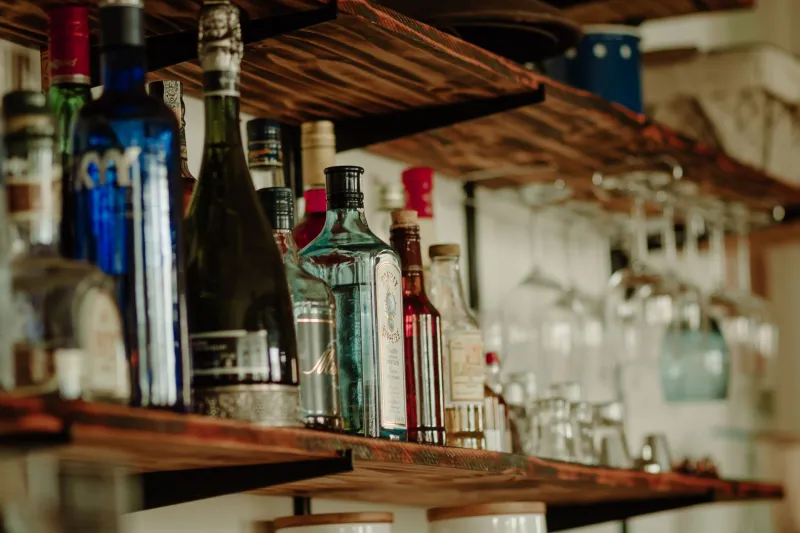
Photo by Photo by Richard Heinen on Unsplash on Unsplash
You know the moment. The bottle is open, the glass is poured, and the closure is set down on the table like a small punctuation mark. For most drinkers it is an afterthought. For a craft distiller, it is one of the last decisions they make before a bottle goes out into the world — and one of the few that every single customer will physically touch.
A closure has to do a job: keep the liquid in, keep the air out (or let a controlled amount in), survive transport, look right on a shelf and, increasingly, make some kind of environmental sense. It also has to feel right. That is a lot to ask of a piece of cork, plastic or aluminium.
What the closure is actually doing
Strip it back and a closure is a seal with a personality. Its first job is mechanical: stop the spirit escaping and stop the outside world getting in. For a 40% ABV whisky or a navy-strength gin, that means resisting evaporation, handling changes in temperature and surviving a journey from a distillery in, say, rural Perthshire to a flat in Bristol.
The second job is chemical. Natural cork is not inert. It is a cellular material that lets a tiny, variable amount of oxygen through. In wine that is a central part of the story. In spirits, the effect is smaller and much more debated. Some distillers believe a good cork lets a bottle settle and evolve gently over years. Others point out that a spirit is already a stable, high-alcohol environment and that the difference is marginal next to the influence of the cask.
The third job is social. A closure is the first physical interaction a drinker has with a bottle. It signals something before a drop is poured: tradition, precision, economy, premium. It is, in effect, a handshake.
Cork: the romantic option with a job to do
Natural cork remains the default for much of the UK's whisky and premium gin output, and for good reason. It is renewable, it comes from forests that support a wider ecosystem, and it has a tactile quality that no plastic stopper quite matches. A head distiller on the Moray coast told us that cork is part of the 'ritual' of opening a bottle. 'You hear it. You smell it. It sets a pace,' he said.
But cork is not a single thing. There is a difference between a cheap agglomerate cork and a high-grade natural cork, and between a cork that has been washed, coated or treated and one that has not. The old bogeyman is TCA, the compound responsible for cork taint. It is far less common than it once was, but it has not disappeared, and for a small distillery a single tainted batch is a costly embarrassment.
There is also the high-strength problem. Spirits at 50% ABV and above can be tough on natural cork over long periods, extracting compounds and gradually breaking down the surface. That is one reason why some cask-strength bottlings use tighter-grained corks, synthetic alternatives or a screwcap, even if the packaging looks less romantic.
Synthetic stoppers: consistency over ceremony
Synthetic stoppers — extruded or moulded from food-grade plastics — have become a quiet workhorse in the UK craft sector. They are consistent, they do not carry TCA, they are easy to print or colour-match, and they can be made to fit a bottle neck precisely. For a distillery producing a clear spirit that it wants to taste the same every time, that consistency is worth a lot.
A Cardiff gin producer we spoke to uses synthetic closures across her core range. 'I love the idea of cork,' she said. 'But I also love the idea that the bottle someone opens in Aberdeen tastes exactly like the one I signed off in the distillery. Synthetic gives me that.'
The trade-off is less romantic. Synthetic stoppers can be harder to pull, they do not breathe in the same way, and their recyclability depends on the plastic and the local waste stream. Some are recyclable; many are not widely collected. For a brand that sells itself on environmental care, that is not a trivial detail.
Screwcaps: the quiet professional
Screwcaps have shed much of their old stigma in the UK, particularly in gin, vodka and liqueurs. An aluminium screwcap with a food-grade liner gives a reliable seal, is easy to reseal, and travels well. It is also a practical choice for smaller bottles, tasting samples and any product where the drinker might not finish the bottle in one go.
A closure supplier in the Midlands told us that screwcap technology has improved dramatically. 'The liners are the key,' they said. 'A good liner gives you a barrier that is predictable. It is not about cheapness anymore. It is about fitness for purpose.'
The perception problem lingers in some corners. Many whisky drinkers still associate screwcaps with supermarket own-label or young spirits, even when the liquid inside deserves better. That is a brand question as much as a technical one.
Glass, wood and the premium end
At the top end, glass stoppers and heavyweight wooden-topped corks do a different job. They are about presence. A glass stopper — the kind with a silicone ring — feels substantial, re-seals well and can be reused. It also costs more, requires a precise bottle neck and adds weight. For a limited release or a gift pack, that trade-off can make sense. For a volume product, it rarely does.
The shelf-life question
How much does the closure really affect a spirit once it is open? Less than many drinkers fear, but more than some distillers admit. A well-made closure will slow evaporation and limit oxidation. A poor one will let a bottle fade faster, especially if it is stored upright in a warm kitchen. The closure is not a magic shield. It is one part of a chain that includes the bottle, the fill level, the storage conditions and how often the bottle is opened.
For unopened bottles, the closure matters most as a guarantee of integrity. A spirit can sit on a shelf for years. The closure is the thing standing between the liquid and the air.
Sustainability is not just the material
It is tempting to sort closures into good and bad: cork good, plastic bad, aluminium complicated. The reality is messier. Cork is renewable and supports biodiversity, but it travels. Aluminium is widely recycled, but making it is energy-intensive. Synthetic stoppers are plastic, but they are light and can reduce breakage. Glass stoppers are reusable, but heavy to ship.
A few UK distillers are now asking suppliers for life-cycle data, not just price lists. Others are switching to lighter bottles and simpler closures to cut transport emissions. The closure is a small component, but it is part of a bigger sum.
What the choice says about the brand
The closure is never just functional. A natural cork says tradition and patience. A screwcap says practicality and confidence. A synthetic stopper says consistency. A glass stopper says occasion. None of these messages is wrong. The question is whether the closure matches the liquid and the drinker.
A distiller's choice of closure is a small admission of what they value. It is also a reminder that craft is not only about the still or the cask. It is about the last millimetre of the bottle — the bit you touch first, and the bit that decides how the conversation begins.