Half Measures, Full Disclosure: What 35cl Bottles Reveal About Craft Spirits
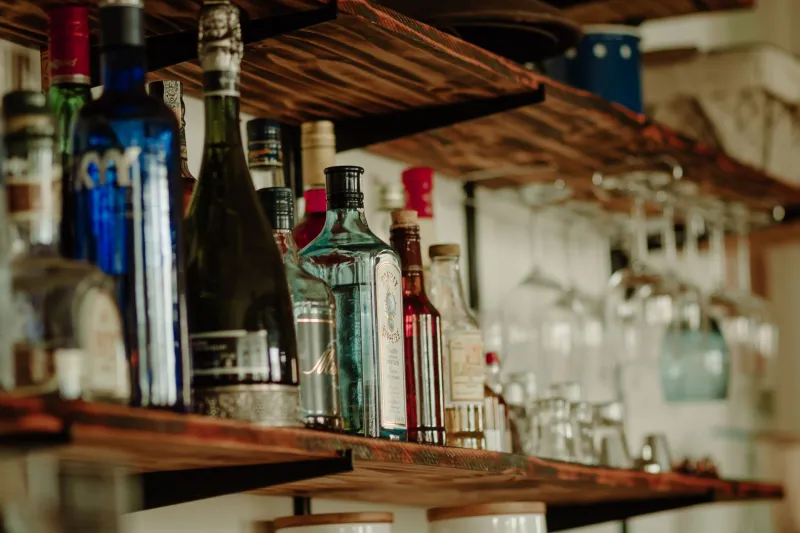
A 35cl bottle has a way of making a distillery answer questions it would rather leave in the warehouse. Not loudly, and not all at once. But put a half-size next to its 70cl sibling on a shop shelf and the conversation turns to price per litre, batch sizes, glass costs and the real reason you are being asked to take a punt on a full bottle.
The half bottle is not a new idea. It is not even a particularly fashionable one. But in UK craft spirits it has become quietly useful — a way for drinkers to try before they commit, for distillers to widen a range without bottling a whole warehouse, and for gifts to look like gifts rather than apologies. The question is why more producers do not do it, and what a 35cl release tells you when they do.
The maths of a smaller pour
Start with the obvious: a 35cl bottle should not cost half the price of a 70cl. It contains half the liquid, but it does not contain half the glass, half the label, half the closure, half the packing case or half the admin. UK duty is charged per unit of alcohol, so that part scales down fairly neatly. Everything else does not.
A sensible rule of thumb is that a half bottle lands somewhere between 55% and 70% of the full-size price. Below that, someone is either taking a loss to get you in the door or the full-size is carrying more margin than the distillery would like to discuss. Above that, you are paying a convenience premium — and that is fine, as long as it is honest.
This is where the half bottle earns its keep. It makes the full-size price legible. If a 70cl is £48 and the 35cl is £32, you are not just buying a smaller bottle; you are being shown what the packaging and the shelf space cost. If the 70cl is £44 and the half is £24, the maths is tighter and the full bottle looks like the better buy. Either way, you learn something before you hand over the card.
Trial without the leap
A full bottle is a commitment. It is a commitment of money, certainly, but also of space, of evenings, of the small social awkwardness of having a bottle you do not love and cannot quite palm off on guests. A 35cl is a weekend. It is two or three proper drinks, or a month of quiet nightcaps if you are disciplined about it.
That matters most for the expressions that are hardest to try in a bar. A cask-finished whisky, a peated gin, a navy-strength rum, a botanical spirit with a savoury edge — these are the bottles that divide a room. A half bottle lets you find out which side of the room you are on without turning your drinks cabinet into a museum of near-misses.
It also suits the way a lot of people actually drink now. Smaller households, less frequent drinking, more interest in trying a wider range rather than draining a single favourite. A 35cl bottle fits that life better than a 70cl does. It is not about moderation as a lecture; it is about moderation as a practical arrangement.
Shelf presence and the gift question
Retailers like half bottles for reasons that have nothing to do with romance. They fit on crowded shelves. They work in hampers. They sit nicely beside a box of chocolates without pretending to be a full present. For a distillery with four or five expressions, a 35cl range is a way of showing the breadth of what they do without asking a shop to stock four or five full-size bottles that may not all move.
And yet most UK craft distillers still lead with 70cl. Some do not offer a half at all. The reasons are usually practical: minimum bottling runs, label costs, the extra handover time, the fact that a small bottle can look like a novelty rather than a serious release. There is also a quiet fear that a 35cl bottle makes the brand look small — or, worse, makes the full-size look expensive.
That fear is worth taking seriously, but it is not a reason to avoid the format. A half bottle does not make a brand look small. It makes the brand look willing to be tried. The ones that get it wrong are the ones that treat 35cl as a souvenir, a wedding favour or a way to shift a liquid that did not quite work at full size.
When a half bottle is a genuine cut
A genuine 35cl release is not a different product. It is the same liquid, at the same strength, from the same batch, with the same information on the back label. If the half bottle is a different ABV, a different age statement or a different cask make-up, ask why. Sometimes there is a good answer. Often there is not.
Check the price per litre. Check whether the half bottle carries the batch code, the bottling date and the same tasting note. Check whether it is being sold as a gift set with a tumbler you do not need, because that is usually a sign that the liquid is not the main event. And check whether the distillery offers the same expression in both sizes, rather than reserving the half for a flavoured or chill-filtered version that never appears at 70cl.
The best half bottles are boring in the best way. Same spirit, smaller vessel, clearer choice. They do not promise a secret reserve or a limited edition. They just let you find out whether you want more.
What it changes for drinkers
A half bottle is a small test of trust. It says the distillery is willing to be judged on a shorter pour, at a lower stake, without the theatre of a full-size purchase. For drinkers, that is a useful thing. It turns exploration from a gamble into a decision.
It also puts a bit of pressure on pricing. Once a 35cl exists, the 70cl has to justify itself. That is not a bad thing for a category that sometimes asks drinkers to pay for the story before they have tasted the spirit. A half bottle will not fix that on its own. But it makes the conversation a little more honest — and in craft spirits, honest is usually the best place to start.