Whose Still Is It Anyway? The Quiet Trade Behind UK Craft Spirits
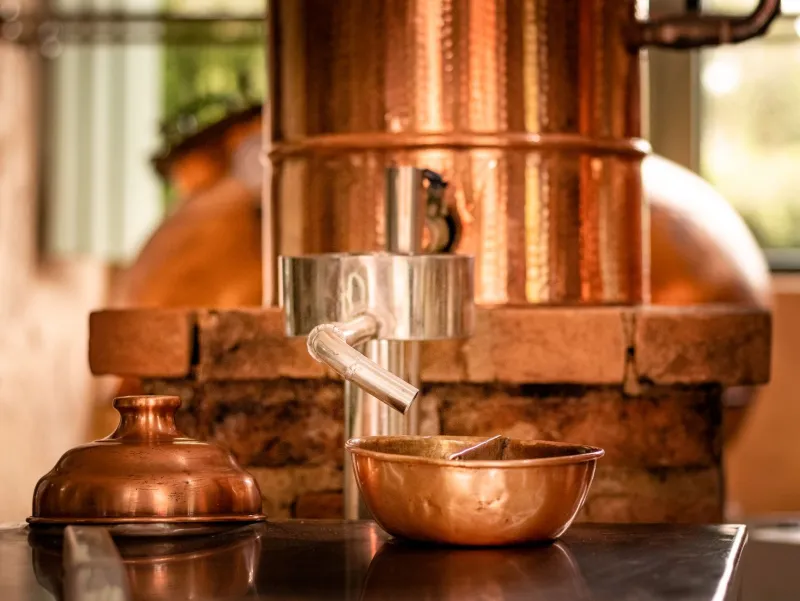
A craft spirits bottle can carry a founder’s signature, a romantic origin story and a map of a distant field. What it doesn’t always carry is the name of the distillery that actually made the spirit. That isn’t a loophole or a scandal in itself. Contract distilling is a normal part of the UK drinks trade, and plenty of good bottles come out of it. But it does make the word “craft” do a lot of heavy lifting — and it puts a useful question back in the drinker’s hands.
What contract distilling actually means
At its simplest, contract distilling is when one business pays another to make spirit. A brand owner might arrive with a fully formed recipe and a clear specification; or they might start with a distillery’s existing base spirit and work with the team to adjust botanicals, mash bill, strength or cask programme. The distillery may handle development, fermentation, distillation, maturation, blending, bottling and labelling — or only some of those steps.
There’s a wide spectrum. At one end sits white-label production: a distillery makes a spirit to its own specification and a brand puts its name on it. At the other is a bespoke arrangement where the brand owns the recipe, the distillery provides the kit and expertise, and the two work closely together on every run. Both can produce serious drinking. Neither is the same as a brand owning its own still and distilling every drop.
The label tells you less than you think
UK labelling rules are strict about some things and quiet about others. A bottle must carry the name and address of the food business responsible, the ABV, the volume, allergen information where relevant, and other mandatory particulars. What it doesn’t have to do is name the distillery that carried out distillation. Nor does it have to explain whether the brand owns a still, rents capacity, or simply buys finished spirit.
The word “craft” has no protected legal definition in the UK. That means it can be used in ways that range from deeply meaningful to purely atmospheric. Protected terms such as Scotch whisky or Irish whiskey carry their own rules, but generic craft spirits don’t come with a single badge that proves hands-on production.
Some phrases are more informative than others. “Distilled and bottled by” is a stronger statement than “bottled by”. “Distilled at” can be genuinely helpful, especially when it names a real, visitable distillery. “Produced by” is broader, and “made in” can refer to a process as simple as blending or flavouring. None of these phrases is inherently dishonest — but they aren’t interchangeable, and drinkers are right to read them with a little care.
Why a brand might not own a still
Capital is the obvious answer. A copper still, a site, a licence, water treatment, warehousing, staff and years of stock are expensive. For a new brand, contract distillation can be the difference between launching and not launching. It also allows a founder to test a recipe, learn the market and build a customer base before committing to bricks and mortar.
There are other reasons. A distillery may have expertise in a particular style, spare capacity between its own runs, or a cask programme that would take years for a new brand to replicate. Contract work helps distillers pay the bills and keeps skilled teams employed. It can also lead to genuinely interesting collaborations: a bartender with a strong botanical idea, a wine merchant with an unusual cask, a chef with a clear flavour brief.
For the distillery, contract production is often unglamorous but important. It fills the gaps, funds experimentation and builds relationships. For the brand, it offers speed and flexibility. The tricky part is when the marketing story implies more hands-on production than the arrangement actually involves.
The distiller’s point of view
Distillers who do contract work tend to bristle at the idea that their part is somehow less craft than the brand’s. The skill is still there: recipe development, fermentation, cut points, consistency across batches, cask selection, blending. Making someone else’s recipe well is not a shortcut. It is a technical service, and a demanding one.
What frustrates some is the way the story gets told afterwards. A brand may talk about “our still” when it doesn’t own one, or “our distillery” when it is renting time at someone else’s. That can leave the distillery invisible — the people who actually distilled the spirit, often to a high standard, written out of the narrative.
Some distilleries now ask for credit as part of the deal. Others don’t mind either way, as long as the client pays on time and represents the liquid accurately. The common ground is simple: contract distilling isn’t the problem. Pretending it didn’t happen is.
Transparency is becoming a selling point
A growing number of UK brands now put the distillery name on the back label, or explain the production arrangement on their website. Some go further, naming the still, the distiller, the cask type and the bottling date. This isn’t just ethics; it’s good marketing. Drinkers who care enough to spend £40 on a craft bottle often care enough to want the whole story.
That said, transparency isn’t yet universal, and it isn’t always neat. A brand may be honest about contract distillation but vague about recipe ownership. A distillery may be named on the website but not the bottle. A “made in” claim may be technically true but less revealing than a drinker assumes. The direction of travel is towards more disclosure, especially among smaller producers who know their customers ask questions.
How to ask better questions
You don’t need to turn into a label detective every time you pick up a bottle. But a few straightforward questions can tell you a lot. Who distilled it? Where? Is the recipe the brand’s own? How long was it aged, and in what? Was it bottled by the distillery or elsewhere?
In a shop or bar, ask whoever is behind the counter. Many independent retailers now know the production stories behind the bottles they stock, and specialist bars are often even better informed. Online, look for a named distillery, a contact address that isn’t just a mailbox, and language that distinguishes between “distilled by”, “blended by” and “bottled by”.
If a brand is evasive, that tells you something. If it is open, that tells you something too. Contract distillation doesn’t make a spirit bad any more than owning a still makes it good. What matters is whether the people involved care about the liquid — and whether they are straight with you about who did what.
At Liquorsmiths, we’re not interested in turning every bottle into an audit. We’re interested in craft spirits made with care, and in drinkers having enough information to judge them properly. The name on the front of the bottle is the start of the story. It doesn’t have to be the whole of it.