The Taproom Effect: What Distillery Bars Add — and What You Bring Yourself

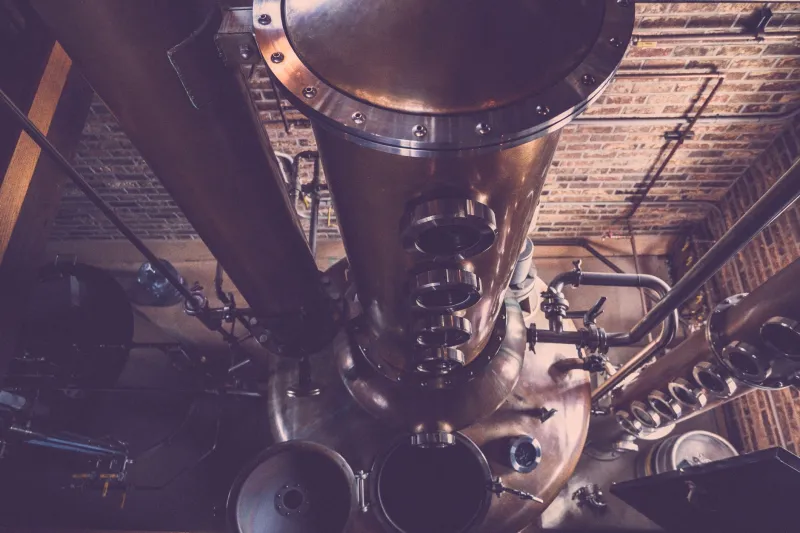
Photo: craft distillery tasting room bar Scotland, via artandcraftdiy.com
There is a specific disappointment that only a distillery taproom can set up. You stand at a scrubbed wooden bar, maybe with a view of the stills, maybe with a dog asleep by the door. The server pours a 25ml measure, adds a drop of water without being asked, and hands you a glass that smells like the best thing you have smelled all week. You buy a bottle. A week later, on a Tuesday, in your kitchen, the same spirit is... fine. Good, even. But smaller.
The obvious question: is the spirit different, or are you? The less obvious question: what exactly is the taproom doing that your kitchen is not? And can you tell the difference between a distillery bar that is genuinely good at serving its own spirits and one that is simply riding a nice day out?
We have spent the past few months doing the only sensible thing: drinking at the source, buying the bottle, and repeating the exercise at home. From a Kentish gin distillery to a Speyside whisky bar, a west Wales whisky room to a Yorkshire gin taproom, the pattern is consistent. The taproom usually wins. But not always for the reasons the taproom would like you to believe.
The Source Advantage Is Real — But It Is Not All Liquid
A distillery bar has a few genuine advantages over your kitchen. Freshness is one. A bottle opened last week and kept cool will often show better than one that has been sitting half-full on a shelf since last Christmas. Temperature is another. Spirits served at the right strength and temperature are simply more expressive. Glassware matters too: a copita or a tulip will focus aromas in a way that a tumbler never will.
Then there is the serve itself. At the source, someone often adds water for you, or asks whether you would like it. They may explain why. They may pour a slightly more generous measure than the law strictly requires. They may hand you the bottle to nose alongside the glass. None of that changes the liquid, but all of it changes how you taste it.
And then there is the context. You have just walked through a mash tun, or heard about the fermenter that refuses to behave, or smelled the botanicals room. You are on holiday, or at least on a day out. The brain is a generous editor. It folds the whole experience into the glass. That is not cheating — it is just being human — but it does mean you need a way to separate the pour from the postcode.
What the Taproom Actually Changes
Strip away the scenery and the taproom is doing six practical things: fresher bottles, better temperature control, appropriate glassware, a measured serve, optional water, and staff who know the product. Every one of those is replicable at home. Not perfectly, but closely enough to make a fair comparison.
The one thing you cannot replicate is the still room smell, the light through the window, or the fact that someone else is washing the glasses. That is the holiday mood. It is lovely. It is also not evidence.
The At-Home Replication Test
This is not a laboratory method. It is a drinker's method, and it takes about twenty minutes.
Buy the bottle at the distillery. Before you leave, note exactly how they served it: measure, glass, water, temperature, any garnish. At home, within a week, replicate the serve as closely as you can. Use the same style of glass if you have one. Measure the same amount. Add the same number of drops of water. Let both glasses sit for a minute.
Then pour a second glass blind — same spirit, same measure — and get someone else to hand them to you. Score aroma, palate, finish, balance and value. If the taproom pour still wins by a clear margin, the bar is doing something right. If the two are close, you were probably paying for the day out. That is not a scandal. It is just useful to know.
Repeat with a second distillery if you can. Two data points are not a trend, but they are enough to tell you whether your palate is responding to the spirit or the story.
A Checklist for Judging Distillery Bars on Substance
Atmosphere is easy. Substance is harder. Next time you are at a distillery bar, score it on these rather than the view.
- Do they pour their own core range neat, or only in cocktails and liqueurs?
- Is the measure honest and stated? A 25ml pour that is actually 20ml is a tell.
- Is the glassware appropriate? A tumbler is not a crime, but a copita tells you they care.
- Is water available and offered, not hidden behind the bar?
- Can the staff explain the serve — why this glass, why this water, why this temperature?
- Is the spirit served at a sensible temperature, not straight from a hot shelf?
- How does the bar price compare with the shop price? A modest premium is fair. Gouging is not.
- Do the flights help you compare, or just upsell the most expensive bottle?
- Can you actually nose the spirit, or is the room too loud and too warm?
- Do they sell the bottle at a fair price, so you can take the test home?
A taproom that scores well on most of these is not just a nice day out. It is a place that understands its own product. A taproom that scores badly is still allowed to be fun. It is just not evidence that the spirit is better at the source.
When the Taproom Flatters the Spirit
Some distillery bars make average spirit taste excellent through a strong serve: tonic, citrus, sugar, a lot of ice. That is fine if you are ordering a cocktail. It is useless if you are trying to judge the spirit. Ask for a neat 25ml as well. If they refuse, or look baffled, note it. It is not automatically a red flag, but it is a data point.
The same goes for distillery-exclusive bottles. They can be wonderful. They can also be young, quirky, or priced for the souvenir market. Taste before you buy, and if you cannot taste, buy the smallest bottle they sell.
The Verdict: Context Is Not Cheating
We are not arguing that you should ignore the taproom experience. A good distillery bar is one of the great pleasures of British drinks travel. The stills, the smell of the mash, the person behind the bar who actually knows what they are pouring — it all adds up to something worth paying for.
But the bottle has to travel. A spirit that only sings within sight of its own still is not a great spirit. It is a great day out. The best distilleries give you a serve you can recreate at home and a bottle that does not need the scenery. Use the checklist. Buy the bottle. Test it on a Tuesday. If it still tastes good with the washing-up waiting, you have found something worth keeping.