The Extra Yard: Why 46% ABV Has Become Craft Spirits' Quiet Standard
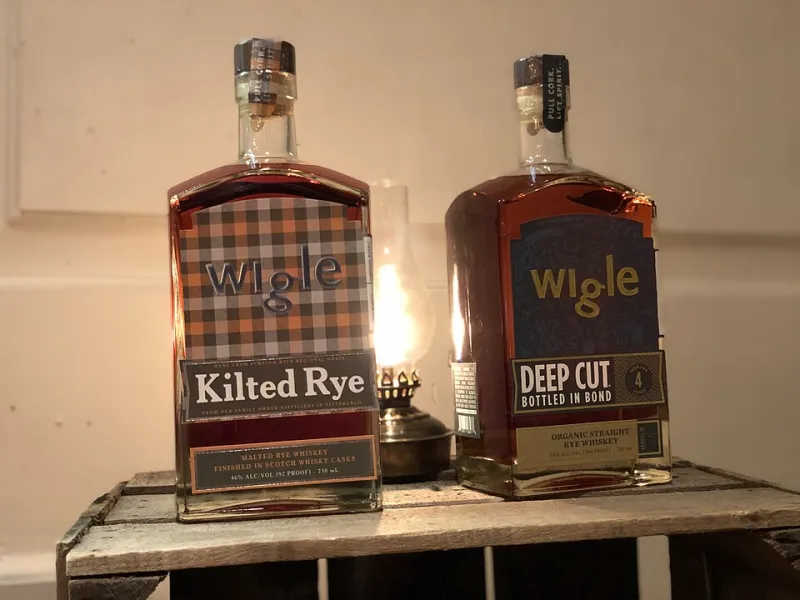
Photo: Mr leroy playpus, CC BY-SA 4.0, via Wikimedia Commons
Walk into a decent bottle shop and you can often guess the shelf before you read a word. The supermarket own-label and the big brands sit at 40% ABV. The bottles with the batch numbers and the distiller's signature on the back tend to sit at 46%. That six-point gap is not a coincidence, and it is not purely marketing. It is a chain of small decisions about flavour, filtration and, awkwardly, tax.
Forty Per Cent Is a Habit, Not a Law
UK law sets the floor for spirits at 37.5% ABV, so 40% is a choice rather than a requirement. It became the default for sensible reasons: it is easy to hit consistently, it stretches a cask further, and it behaves well on a shelf for years. It is also the strength at which chill filtration works most reliably. Push a spirit down towards 40% and the fatty acids and esters that would otherwise stay dissolved can start to haze up when the bottle gets cold — a look most supermarkets will not tolerate.
So the mainstream answer was to dilute to 40% and chill filter the haze out. The craft answer, increasingly, has been to stop short of that dilution and skip the filtration altogether. Forty-six per cent has become the shorthand for that second approach — a strength at which many spirits stay clear without being chilled and stripped.
The Duty Maths Makes 46% a Statement, Not a Shortcut
Here is the bit that surprises people. UK spirit duty is charged per litre of pure alcohol, not per bottle. A 70cl bottle at 40% contains 0.28 litres of pure alcohol. The same bottle at 46% contains 0.322 litres — roughly 15% more duty. A distiller who chooses 46% is therefore paying more tax per bottle, not less.
That matters when you are weighing up whether the extra strength is a gimmick. It is an expensive one to fake. Choosing 46% means accepting a higher duty bill, a lower yield from every cask, and a bottle that will not stretch as far on the shelf. Distillers do it because they believe the spirit tastes better that way — or because they want to leave the option of non-chill filtration open.
One caveat worth repeating: 46% does not automatically mean non-chill filtered. Some producers still chill filter at that strength. If it matters to you, look for the words on the label rather than assuming.
What the Extra Six Points Actually Do
Strip away the jargon and the difference shows up in three places.
Aroma. Ethanol is a carrier. More of it means more volatile compounds lifted out of the glass and into your nose, which is why a 46% spirit often smells louder and more detailed than its 40% sibling. It also means more alcohol prickle, so the nose can feel hotter if the spirit is not built to carry the strength.
Texture. Higher strength generally means a heavier, oilier mouthfeel. The difference is not dramatic — you are not suddenly drinking syrup — but it is noticeable, particularly in the mid-palate, where a 40% bottling can start to feel thin and watery.
Length. Finishes last longer at higher strength. Aromas linger, the aftertaste hangs about, and the whole experience stretches out by a few seconds. Whether that is a good thing depends entirely on what is lingering.
There is a flip side. Ethanol can mask as well as reveal. A delicate, floral spirit bottled at 46% may lose some of its top notes to the alcohol heat. Strength is a tool, not a badge of quality — a poorly made spirit at 46% is still poorly made, just louder about it.
The Home Test: One Bottle, Two Glasses
You do not need two bottles to taste the difference. You need one bottle at 46% and a way to measure water accurately.
- Pour 50ml of the 46% spirit into each of two identical glasses.
- Leave one as it is.
- To the other, add 7.5ml of water. That brings 50ml of 46% down to roughly 40% — the same strength as the mainstream version. A pharmacy syringe is the easiest way to be precise; a teaspoon is about 5ml, so one and a half teaspoons will do at a push.
- Swirl both gently and leave them for ten minutes. This rest matters — the spirit needs time to settle after dilution.
- Nose them side by side, then taste them side by side. Do not rush. Go back and forth a couple of times.
Most people find the 40% sample smells softer and rounder, and the 46% sample smells more detailed but hotter. On the palate, the 46% usually feels fuller and finishes longer. Which you prefer is genuinely personal, and it can change with the spirit.
Then try a third thing: add two or three drops of water to the untouched 46% glass and nose it again. A small amount of water often opens up a spirit without flattening it, which is why so many distillers suggest it.
When 40% Is the Right Answer
This is not a crusade. Plenty of spirits are better at lower strength — delicate gins, floral vodkas, anything designed around dilution. Some distillers bottle at 40% because that is where their recipe sings, and they are entitled to say so.
The useful takeaway is not that higher is better. It is that strength is a decision someone made on your behalf, and it is worth knowing what that decision does. Next time you are in an off-licence, glance at the ABV before you read the tasting notes. It tells you something about how the bottle was built — and about what the person who made it was willing to pay for.