Twice-Told Wood: Why Refill Casks Deserve a Straighter Conversation
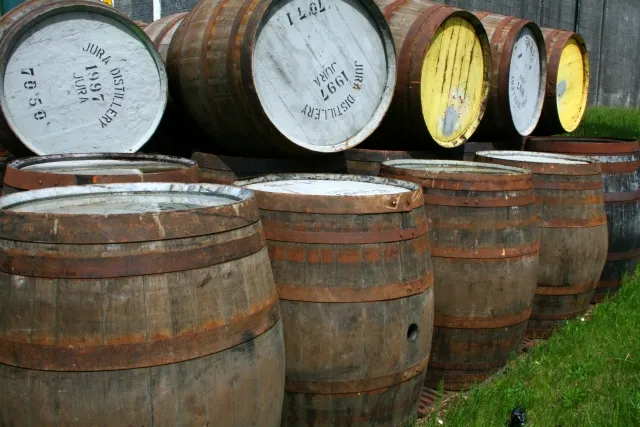
Photo: Steve Partridge, CC BY-SA 2.0, via Wikimedia Commons
There is a quiet hierarchy in the way we talk about casks. First-fill this, virgin oak that, a sherry butt with a famous name on the side. Refill casks, by contrast, tend to get a shrug. They are the supporting act, the sensible shoes, the wood that has already had a life. But spend an afternoon with distillers who work with them and a different picture emerges. Refill casks are not a compromise. They are a tool — one that asks for more judgement, not less.
First, a Definition Without the Sales Pitch
A refill cask is simply a cask that has held something before. In UK craft spirits, that usually means a cask previously used for maturation — a second-fill bourbon barrel, a third-fill hogshead, a refill sherry butt. It is not the same as a cask that has been recharred, and it is not the same as a cask that once held port for six months and is now marketed as a port finish. The history matters, and so does the gap between what a label says and what the cask actually did.
“We treat cask history like a CV,” says Ruth Calder, head distiller at a small Edinburgh operation that releases both single malt and rye. “A first-fill cask shouts. A refill cask speaks. You have to listen to it, and you have to know what your spirit needs before you choose which one to put it in.”
The CV of a Cask
Distillers ask a series of practical questions before a refill cask goes anywhere near new spirit. What was in it? For how long? Was it a wet cask or a dried-out one? Was it stored upright or on its side? Has it been steamed, scraped, recharred or left alone? A cask that held oloroso for three years will behave differently from one that held it for six months. A refill bourbon barrel that has already given up its loudest vanillin will not hand the same sweetness to a second tenant.
“People hear ‘refill’ and think ‘neutral’,” says Tom Rennie, who makes gin and a small-batch malt in Bristol. “But neutral is a spectrum. A third-fill cask can still have plenty to say if the spirit is right. The trick is not to ask the cask to do the work for you.”
That is the first trade-off. Active wood — first-fill, virgin, heavily toasted — extracts quickly. It gives colour, tannin, vanilla, spice. Refill wood extracts slowly. It lets the spirit lead. For a distiller trying to protect a delicate floral or cereal character, that is not a weakness. It is the point.
Active Wood vs Subtle Maturation
The second trade-off is time. Refill casks generally need longer to leave a mark. A first-fill cask might be ready in three or four years; a refill cask might need six, eight, ten. For a small UK distillery with cash tied up in stock, that is a real cost. It is also why refill casks often carry a lower price tag per cask — and why some drinkers assume a lower price means lower quality.
“We have to be honest about that,” Calder says. “A refill cask is cheaper for us to buy. That does not make the whisky cheaper in character. But it does mean we have to be patient, and patience is expensive.”
There is also the question of consistency. Refill casks vary more than fresh ones. A distiller might find one second-fill hogshead that is bright and mineral, another that is flat and tired. The solution is not to avoid refill but to taste more, blend more carefully, and accept that the wood is a collaborator rather than a template.
The Cost and Carbon Case
Refill casks make environmental sense. A cask is a substantial object — oak, coopering, transport — and reusing it keeps that carbon and craft in play for longer. For UK distillers facing rising costs and increasing scrutiny of their supply chains, that matters. It also makes economic sense. A small distillery might not be able to afford a steady stream of first-fill sherry butts, but it can build a library of refill casks with varied histories.
“Sustainability is not just about what you put in the bottle,” Rennie says. “It is about what you put the bottle in, and what you put that in. A refill cask is a second chance for good wood. We should talk about that more.”
Reading the Label Without Assumptions
So what should a drinker do with the words on a back label? Treat “refill” as information, not a grade. A second-fill oloroso cask is not the same as a refill bourbon barrel, and neither is the same as a cask that has been recharred. Look for specifics: the type of cask, its previous contents, the number of fills, whether it was recharred. If the label says only “refill”, ask the distiller. Most are happy to explain.
And do not assume less character. A refill cask can deliver a texture that first-fill wood sometimes smothers — a silky mouthfeel, a long cereal finish, orchard fruit rather than dried fruit, minerality rather than resin. It can also let a distillery’s own character come through more clearly. That is not a lesser experience. It is a different one.
What to Taste For
If you want to understand refill casks in the glass, stop looking for the loudest flavour. Look for structure. Notice whether the spirit feels broad or tight, whether the oak sits on top or underneath, whether the finish is clean and grain-led or sweet and woody. A refill cask often shows more of the spirit and less of the cask. That can be a revelation if you have only ever tasted first-fill releases.
“The best refill casks make you forget the cask is there,” Calder says. “You just taste the spirit, and it tastes like itself. That is harder to achieve than people think.”
Refill casks will never have the marketing glamour of a first-fill sherry butt. But they deserve a straighter conversation — one that treats them as a deliberate choice rather than a cost-saving shortcut. In UK craft spirits, where character and care matter more than volume, that conversation is overdue.