The Long Pour: A Year Learning When to Cut a Still

Photo by Photo by Peter Muniz on Unsplash on Unsplash
At 7.20 on a grey Tuesday in March 2026, the still house at a small distillery on the edge of the Peak District is already warm. The copper pot still is not singing or gleaming romantically. It is being cleaned. Mara, a trainee distiller in her late twenties, is in boots, apron, safety glasses and gloves, checking a hose connection while a senior distiller reads out the previous day’s log. This is the part of the job nobody puts on a label.
We agreed to call the distillery Hollin Bank and the trainee Mara; both names have been changed at the team’s request. Over the course of a year, we checked in at intervals — not to chase a neat story about a dream job, but to understand what a craft distillery actually teaches someone in 2026, and what it deliberately does not rush.
Cleaning is the curriculum
Before Mara was allowed anywhere near a spirit run, she spent weeks learning the unglamorous machinery of the place: tank cleaning, valve routes, temperature checks, chemical handling and the paperwork that sits behind every safe batch. The first six weeks were less about flavour and more about caustic, protective equipment and knowing which line goes where.
‘I thought I’d be tasting all day,’ she says. ‘In reality, my first month was hoses, logs and learning why the floor is always wet.’
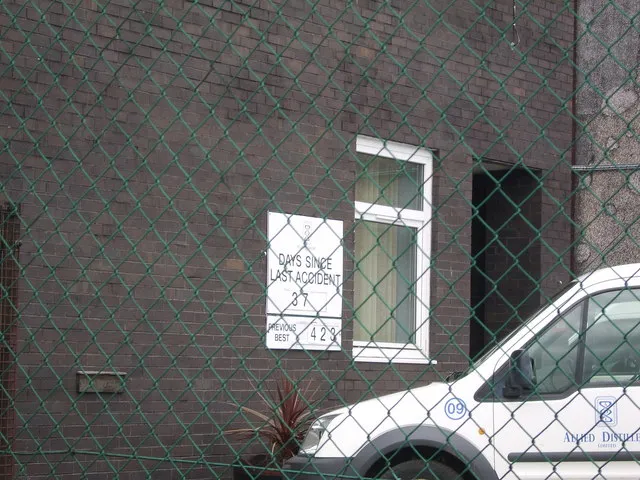
That is not a failure of the training. It is the training. A craft distillery is a small industrial kitchen with alcohol vapour, hot surfaces and cleaning chemicals in close quarters. Safety is not a module you tick off; it is the rhythm of the day. Mara learned to read a risk assessment like a recipe, to check a seal before it becomes a problem, and to write down what happened even when nothing did.
Smell before you sip
The sensory education starts early, but it does not start with drinking. Mara was given reference samples, dilution exercises and a spittoon. She learned to nose spirits at 20% ABV as well as at cask strength, to describe what she found without reaching for the same three words, and to notice when her palate was tired.
‘You can’t just say “smooth”,’ she says. ‘That’s not information. You have to say what kind of smooth. Is it oily? Is it sweet? Is it hiding something?’
Hollin Bank runs short mentored tastings — sometimes ten minutes, sometimes half an hour — rather than marathon sessions. The point is not to turn a trainee into a critic. It is to build a shared language so that when someone says the run is drifting, everyone knows what they mean.
The cut point is a conversation
By late summer, Mara was working production shifts rather than observing them. She knew the run sheet, the expected yields and the smell of the heads. She also knew that the cut point is not a single dramatic decision. It is a series of small ones: when to stop collecting the early spirit, when the heart begins to settle, when the tails start to drag the whole thing backwards.
‘The book gives you a window,’ says the senior distiller. ‘The still gives you the argument.’
Mara learned to taste and smell alongside the clock, the temperature and the previous batch. She learned that a cut point can be technically correct and still wrong for the style the distillery is trying to make. She also learned to ask for a second opinion without treating it as a failure.
The day the call is yours
By autumn 2026, Mara was trusted to make the call on a run with the mentor nearby but not hovering. She describes it as less of a triumph and more of a quiet knot in the stomach. The spirit was coming off clean; the numbers looked sane; the nose was where she expected it. She still hesitated at the cut.
‘You want someone to tell you it’s fine,’ she says. ‘But the whole point is that you have to know why it’s fine.’
She made the call. The run went into the tank. The logbook entry was signed. Nobody applauded. The next job was cleaning.
What a year does not teach
A year inside a distillery does not make someone a master distiller, and Hollin Bank is careful not to pretend otherwise. Mara is still learning how weather, fermentation and cask variation can shift a spirit. She is still building a mental library of reference smells. She is still learning that consistency is a discipline, not a personality trait.
But she has learned the thing that matters most on a still floor: when to stop. Not because the clock says so, or because a spreadsheet says so, but because the spirit in the glass has told her something. That is not a lesson you can download. It is a long pour, and it takes time.