The Quiet Vintage: Why a Distillery’s Off-Season Leaves a Mark on the Bottle
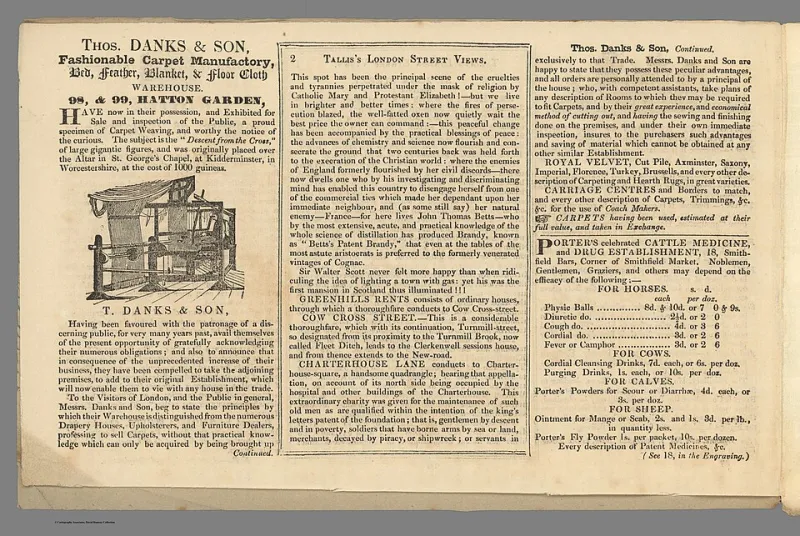
Photo: Tallis, John, 1817-1876 Bigot, Charles Gaspey, William, 1812-1888, Public domain, via Wikimedia Commons
There is a particular sound a distillery makes in late January. Or, rather, a particular silence. The pump has stopped. The condenser isn’t running. Nobody is leaning over a spirit safe with a glass and a worried expression. To a visitor, it can look like the whole place has downed tools until spring.
It hasn’t. It has simply changed gear.
For plenty of UK craft distilleries, the weeks after Christmas are less about making spirit and more about making the next spirit possible. Stills get opened, inspected and scrubbed. Pumps get serviced. Batch logs get read properly instead of glanced at. Staff get trained on things nobody has time to teach in October. And plans for the year ahead — including the releases that will only appear in 2027 or later — begin to take shape.
Call it the quiet vintage. It isn’t a year on a label. It is the stretch of work that never shows up in a tasting note but quietly shapes what ends up in the glass.
The myth of the empty distillery
A working distillery is a small industrial site with a hospitality face. When production slows, the hospitality side may still be running tours and tastings, but behind the scenes the priority shifts to all the jobs that are awkward to do when the still is hot and the phone is ringing.
Deep-cleaning is the obvious one. Copper stills need attention. Wash stills and spirit stills collect residues, and the parts you can’t see are often the parts that matter. A distiller will tell you that cleaning isn’t glamorous, but it is diagnostic: you find a worn gasket, a tired valve, a patch of corrosion, a seal that has been doing its best impression of a seal for slightly too long.
Then there is the equipment that doesn’t make spirit but makes the day work: chillers, boilers, pumps, hoses, filtration rigs, bottling lines, forklifts, and the humble pallet truck that everyone curses until it dies. Servicing these in February is dull. Discovering a failure in the middle of a December bottling run is worse.
One small distillery on the edge of the Peak District uses the quiet weeks to strip and rebuild its bottling line. It isn’t a job anyone enjoys. But the team knows that a clean, well-adjusted filler means fewer overfills, fewer rejects and less waste when the next release goes out. That is not a marketing story. It is a margin story — and a quality one.
Cleaning as a form of memory
There is a sensory side to all this, too. When a still is opened up, cleaned and put back together, the distiller is reminded of how it behaves. Where the copper discolours. Which valve weeps. How the shape of the neck collects a certain residue. These are the small physical facts that get buried under production deadlines.
The quiet season gives people time to notice. And noticing is part of making good spirit.
Batch logs are the same. During a busy run, a log can become a tick-box exercise: date, time, temperatures, volumes, cuts, observations. Later, when the pace drops, someone can actually read the thing. They can compare one wash against another. They can spot that a particular set of fermentation temperatures produced a fruitier spirit, or that a slower run through the spirit still gave a cleaner cut. They can find the batch that everyone loved at the time and work out what was different about it.
That is how a distillery learns its own dialect. Not through a grand manifesto, but through a stack of notes and the patience to read them.
The training nobody films
Staff training is another quiet-season job. Craft distilling has a habit of promoting enthusiastic people into roles that require a surprising amount of technical knowledge. Someone who is brilliant at running tours may need help understanding fermentation chemistry. Someone who can lug a mash tun may need to learn how to read a spirit safe properly.
Quiet months are when that happens. Not in a classroom, necessarily, but over a still that is open and cold, with someone pointing at a part and saying: this is what it looks like when it’s about to go wrong.
There is also tasting training. Not the fun, public sort with a table full of bottles, but the internal sort: comparing retained samples, calibrating palates, arguing politely about whether a new-make has a green edge or a stone-fruit one. It is the least Instagrammable activity in the building. It is also how a team stays consistent when the pressure returns.
Planning the next bottle before it exists
Then comes the forward-looking work. A distillery’s release calendar is rarely built in a week. It is built from casks that are already sleeping, spirit that is still maturing, and decisions about what to bottle, what to hold back and what to blend.
The quiet season is when those decisions get a proper hearing. Which casks are ready? Which need another year? Which experiment was interesting but not interesting enough to sell? Which bottle needs to be made in a larger run because the last one disappeared faster than expected?
This is also when distilleries think about the less romantic stuff: packaging, labels, compliance, stock planning, and the cost of everything from glass to freight. A bottle that appears in autumn may have been argued over in February. The consumer sees the finished thing. The distillery sees the year of small decisions that led to it.
What the silence leaves behind
None of this guarantees a great spirit. Cleaning a still doesn’t make a bad fermentation good. A tidy spreadsheet won’t rescue a clumsy cut. But the quiet months create the conditions for better decisions: equipment that behaves, records that can be trusted, staff who know what they’re looking at, and a plan that isn’t just a panic response to the next order.
When the still fires up again, the change can be subtle. The run might be a little smoother. The cut might be a little more confident. The bottling line might waste a little less. Nobody posts about it. But it is there, folded into the character of the spirit.
So when you open a craft bottle this year, spare a thought for the weeks when nobody was making anything — or, at least, nothing that pours. The quiet vintage doesn’t get a label. It just gets into the bottle anyway.